LifeScienceHistory.com - Check us out on Instagram
Take Your Next Career Step with Lundback
History
Industry
Snapshot | Economy/Cost of Living
Education | Recreation & Entertainment
| Transportation
Geography & Climate
| Suggested Reading
List
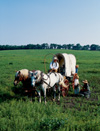 Several Native American tribes, mainly the Pawnee, Ponca, Omaha, Oto, Sioux, Cheyenne, and Arapaho, lived in the Nebraska region prior to settlement by white explorers and fur traders in the 18th century. French explorers originally claimed the area, which was sold back to the U.S. as part of the Louisiana Purchase in 1803. Meriwether Lewis and William Clark explored the state’s eastern edge a couple of years later. In 1813 Robert Stuart and his party followed the North Platte River to the Platte River onto the Missouri River, as part of what was to be known as the Oregon Trail.
Nebraska’s first military post, Fort Atkinson, was established by the U.S. Army in 1819, for the purpose of protecting the frontier. The fort, near the present day Fort Calhoun, became the site of Nebraska’s first school, library, grist mill, and brickyard before it was abandoned in 1827. Bellevue, founded on the Missouri River in 1823, became Nebraska’s first permanent white settlement. In the 1840s thousands of pioneers moved westward along the Oregon, California, and Mormon Trails across Nebraska’s river valleys, until railroads reached the Pacific. Statewide railroad construction prompted development of the communities where immigrants settled. Carrying mail to the west coast, the Pony Express also followed the Platte River valley in the early 1960s.
The pioneers transformed the state from a land considered unfit for cultivation to an agricultural oasis. Nebraska became a territory with the Kansas-Nebraska Act of 1854, opening the area to settlement. The 1862 Homestead Act made free land available to whites for ownership. The farmers stubbornly fought many hardships bringing the land to fruition. Later, scientific farming methods and irrigation significantly increased farmers’ yields and brought prosperity to the state. Today, Nebraska is a leader in many agricultural production categories.
Nebraska joined the Union as the 37th state in 1867. Advertising campaigns to sell lands previously granted to railroads to new settlers and an influx of Civil War veterans seeking land swelled Nebraska’s population to 122,993 by 1870. The first Arbor Day was celebrated in Nebraska in 1872, founded by J. Sterling Morton. Economic boom and hardship cycled through the state with WWI, The Great Depression, severe drought, and WWII in the first half of the 1900s.
Nebraska’s current strong economy and workforce combined with symbiotic higher education programming and favorable business costs make it an attractive location for new and relocating businesses.
Related Resources:
Back to Destination Nebraska